
Show summary Hide summary
- Key findings from the University of Padua study
- Why cheese has more microplastics than milk
- Possible contamination points throughout the supply chain
- Which cheeses are likely to show higher particle counts?
- Potential health concerns tied to microplastic exposure
- Practical steps to reduce microplastic intake from food
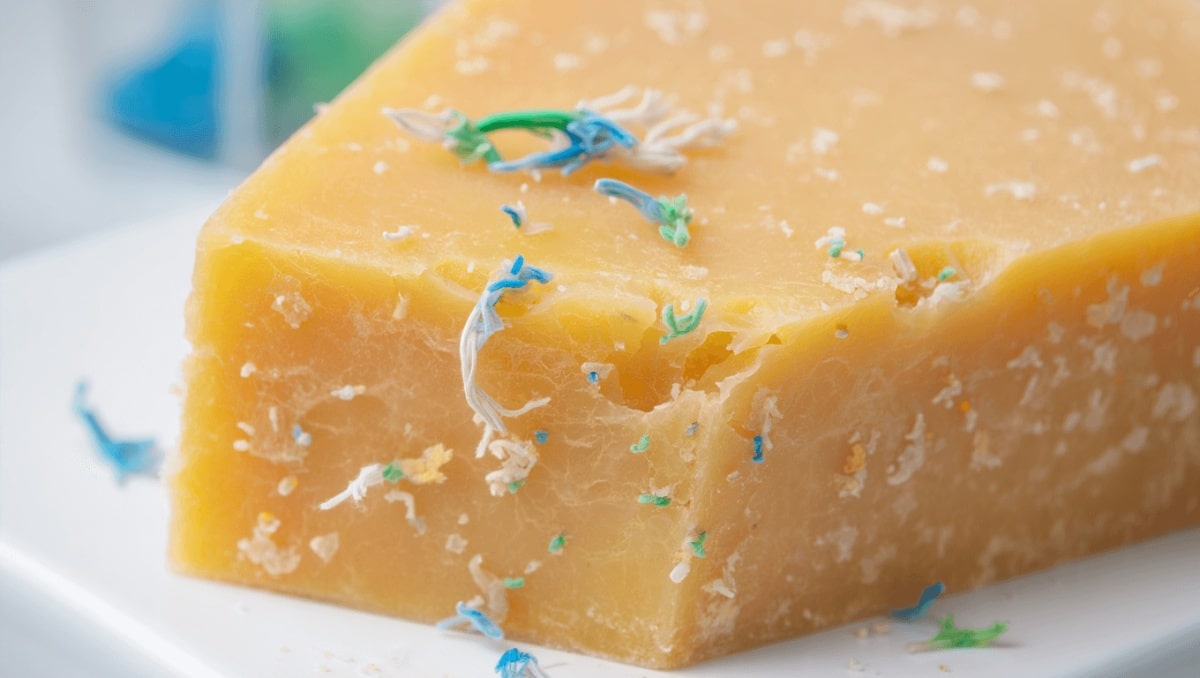
A new analysis from Italy is raising fresh questions about what ends up on our plates. Researchers report microplastic particles across the dairy aisle, with many cheeses carrying higher counts than milk. The findings push the issue beyond packaging and into the heart of food production.
Key findings from the University of Padua study
Scientists examined 28 dairy products, covering plain milk and a range of cheeses. Microplastics were detected in nearly every sample, with only two items free of particles.
Eggs every day for months: simple check reveals shocking blood test result
Popular childhood food ingredient may raise adult anxiety: study
- The most frequently identified polymers were PET, polyethylene and polypropylene.
- Milk samples averaged about 350 particles per kilogram.
- Cheeses showed markedly higher levels, often exceeding 1,000 particles per kilogram.
Why cheese has more microplastics than milk
Cheese production concentrates solids from milk. That concentration process can also increase the number of particles per unit weight.
Fresh versus ripened: a notable difference
- Fresh cheeses measured around 1,280 particles per kilogram.
- Ripened or aged cheeses were higher, averaging about 1,857 particles per kilogram.
Ageing, repeated handling and extended exposure during maturation may explain why ripened varieties tend to accumulate more particles.
Possible contamination points throughout the supply chain
Researchers caution that packaging is not the only source of contamination. Microplastics can enter dairy products at many stages.
- On the farm: animal feed, milking liners, tubing and workers’ clothing.
- During processing: protective garments, conveyor belts and cutting equipment.
- Transport and storage: containers, pallets, and environmental dust.
Plastic particles can be introduced long before cartons or wrappers are added, according to the authors.
Which cheeses are likely to show higher particle counts?
Types of cheese differ in how they’re made and handled, and that appears to affect particle levels.
- Examples of fresh cheeses: mozzarella, ricotta, burrata, feta, mascarpone, cream cheese, cottage cheese, paneer, queso blanco.
- Examples of ripened cheeses: cheddar, Gouda, Gruyère, Camembert, Parmesan, Gorgonzola.
Ripened varieties often undergo repeated surface treatments, packaging changes and longer storage. These steps may increase opportunities for contamination.
Potential health concerns tied to microplastic exposure
Research on health impacts is still developing. Still, several studies point to ways microplastics could affect the body.
- Interactions with metabolic processes, including blood sugar regulation.
- Evidence of liver stress and cellular damage in some experimental studies.
- Links to inflammation, hormone disruption and shifts in gut bacteria.
- Associations in research with chronic conditions such as certain cancers, reproductive issues, heart disease and respiratory problems.
Scientists warn these particles are not biologically inert and may provoke a range of biological responses, though causation is still being studied.
Practical steps to reduce microplastic intake from food
While research continues, experts recommend simple changes to limit exposure.
- Avoid single-use plastic bottles. Use filtered tap water stored in glass or steel bottles.
- Do not microwave food in plastic containers. Use glass or ceramic instead.
- Replace heavily scratched plastic cutting boards with wood, glass or bamboo.
- Choose unpackaged or minimally packaged dairy when possible.
- Wash hands and work surfaces to reduce dust and fiber transfer during food prep.
These steps can lower the amount of plastic fragments you ingest from dairy and other foods.










