
Show summary Hide summary
- Why steamed ginger with rice vinegar is getting attention
- What ginger contributes to health
- Why rice vinegar complements ginger
- Step-by-step: Make ginger steamed in rice vinegar
- How to use this ginger preparation in daily life
- What research suggests and what to expect
- Precautions, interactions, and who should avoid it
- Practical tips for best results
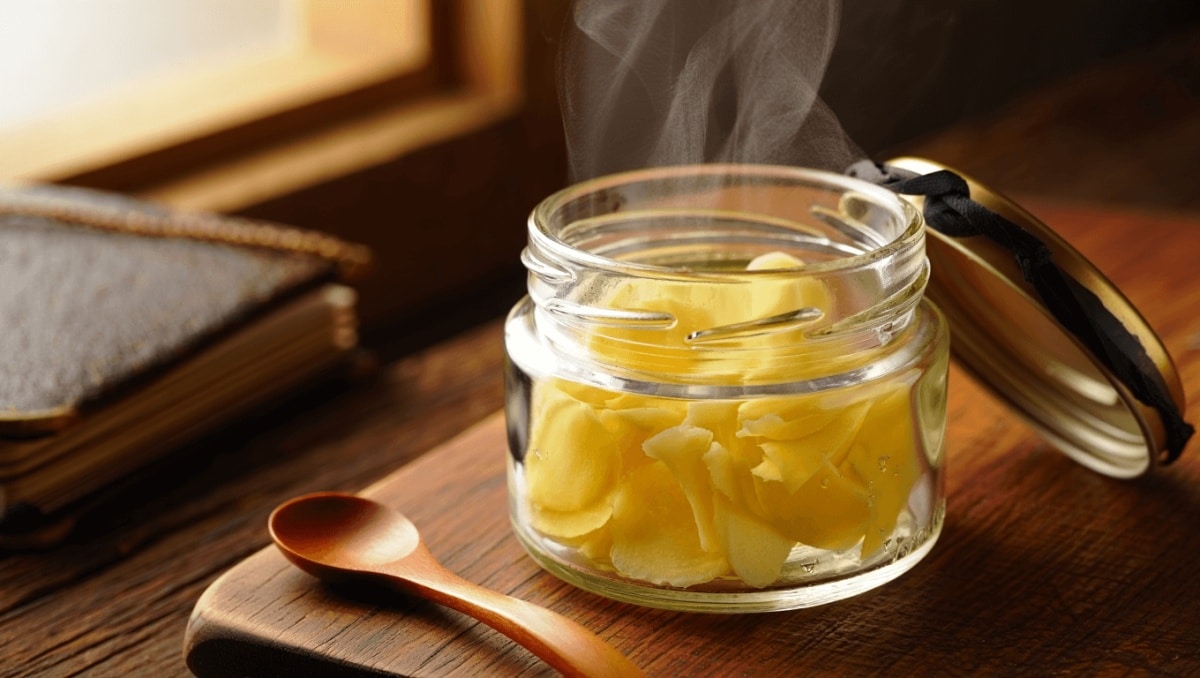
Some people seem to age without the usual aches and fatigue. Their secret is not mystical. For one nonagenarian, a simple homemade remedy stands out: thin slices of ginger steamed and preserved in rice vinegar. This easy preparation is part pantry cure, part culinary boost, and it’s gaining attention for its potential to ease inflammation and support digestion.
Why steamed ginger with rice vinegar is getting attention
Combining ginger and rice vinegar follows a long tradition of using food as medicine. Steam softens the root and keeps its active compounds intact. The vinegar acts as a natural preservative and may help the body absorb beneficial molecules.
Eggs every day for months: simple check reveals shocking blood test result
Popular childhood food ingredient may raise adult anxiety: study
- Steam reduces harshness and keeps nutrients.
- Rice vinegar adds mild sweetness and stabilizes the mix.
- The final product is easy to eat or add to dishes.
What ginger contributes to health
Ginger is a small but powerful rhizome long used in Asian systems of medicine. Modern studies back many traditional claims.
- Supports digestion and reduces bloating.
- Helps relieve nausea and stomach discomfort.
- Improves circulation and vascular health.
- Has antibacterial and antiviral qualities that support immunity.
- Acts as a natural anti-inflammatory and can ease joint and muscle pain.
Why rice vinegar complements ginger
Less famous than apple cider vinegar, rice vinegar is popular in East Asian cooking. It’s gentle and slightly sweet.
- Helps balance gut flora and aids digestion.
- May blunt post-meal blood sugar spikes.
- Contains organic acids that can reduce fatigue.
- Softens ginger’s heat while preserving its benefits.
Step-by-step: Make ginger steamed in rice vinegar
Follow this simple method to prepare a jar ready to add to meals or enjoy alone.
Ingredients
- 100 g fresh ginger
- 200 ml rice vinegar
- 1 tbsp honey (optional, to taste)
Preparation method
- Wash and peel the ginger.
- Slice it very thinly for quick steaming.
- Steam the slices 5–7 minutes until tender.
- Let the ginger cool slightly.
- Place it into a clean glass jar.
- Pour warm rice vinegar over the ginger.
- Add honey if you want milder acidity.
- Seal the jar and let it rest 24 hours before tasting.
You can keep the jar in the fridge for one to two weeks.
How to use this ginger preparation in daily life
This pickled ginger can be eaten in small amounts or used as a flavor enhancer.
- One to two thin slices per day is enough for most people.
- Try it on salads, in stir-fries, or with grilled fish.
- Take a slice in the morning on an empty stomach to stimulate digestion.
- Use for 10–15 day cycles at seasonal changes to support immune resilience.
What research suggests and what to expect
Laboratory and clinical studies highlight ginger’s anti-inflammatory and antioxidant effects. Users often report improved digestion and reduced joint stiffness. Benefits may accumulate with regular, moderate use rather than occasional large doses.
Precautions, interactions, and who should avoid it
Natural does not always mean safe for everyone. Discuss with a healthcare provider if you have health concerns.
- Avoid if you have severe acid reflux or a gastric ulcer.
- People on anticoagulant drugs should consult a doctor first.
- Pregnant or breastfeeding women should seek medical advice.
- Do not exceed recommended amounts; use it as a gentle daily ritual.
Practical tips for best results
- Choose fresh, firm ginger with a bright aroma.
- Use a sterilized glass jar for storage.
- Adjust vinegar and honey to taste for better adherence.
- Label the jar with the preparation date.










