
Show summary Hide summary
- What papaya latex really is and why it matters
- Skin benefits: smoothing, clarifying, and treating problem spots
- Hair and scalp: how papaya sap can help growth and flaking
- Digestive support: enzymes that break down food
- Relief for joints and tired muscles
- Safe preparation and practical applications
- Where to buy papaya latex in France and beyond
- Who should avoid papaya latex and key safety tips
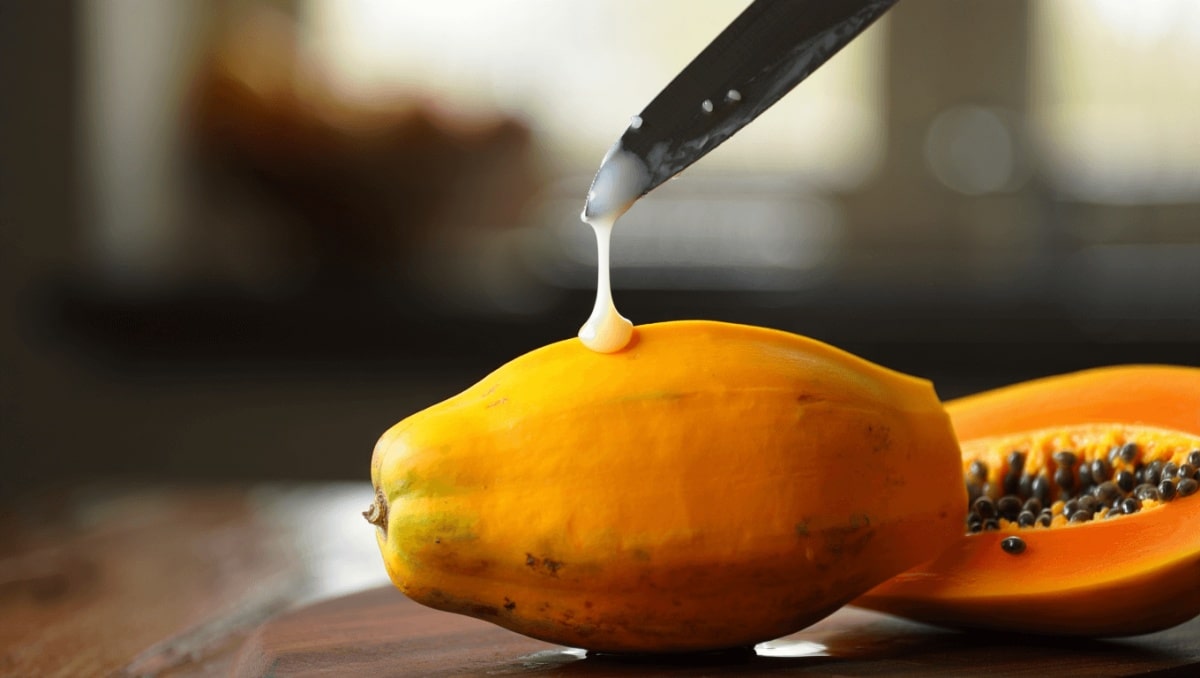
Most people know papaya for its sweet orange flesh. Fewer realize the green fruit hides a white, milky sap that pours out when you nick the skin. This sap — often called “papaya milk” — is actually a potent plant extract full of enzymes. Used correctly, it can help the skin, support digestion, and even soothe sore muscles.
What papaya latex really is and why it matters
Papaya latex is the milky fluid drawn from unripe papayas. It contains a digestive enzyme named papain, plus other proteolytic enzymes and antioxidants. These components break down proteins and can act on dead skin cells, clogged pores, and some stubborn skin growths. The sap is concentrated and active. That makes it effective — and demanding of caution.
Eggs every day for months: simple check reveals shocking blood test result
Popular childhood food ingredient may raise adult anxiety: study
Skin benefits: smoothing, clarifying, and treating problem spots
The latex’s enzymatic action explains many cosmetic uses. It exfoliates gently and helps clear excess keratin. When applied the right way, it can improve texture and clarity.
Smoothing rough areas
- Diluted, the latex softens callused skin on heels, elbows, and knees.
- Mixing a few drops with a carrier oil like coconut or sweet almond oil creates a home remedy for cracked heels.
Fighting acne and clogged pores
- Topical, well-diluted applications can reduce small pimples and blackheads.
- The enzymes help dissolve dead cells without heavy irritation when used sparingly.
Natural wart treatment
Applied externally, the sap can dessicate certain warts over time. It’s a low-tech option that some prefer to harsher chemical treatments. Always protect surrounding skin and stop use if a reaction appears.
Hair and scalp: how papaya sap can help growth and flaking
When added to hair care routines, the latex may rebalance the scalp and reduce flakes. It is used as a pre-shampoo treatment or mixed into masks.
- Use one drop per tablespoon of oil or warm water for a pre-wash scalp massage.
- Apply once or twice weekly for several weeks to judge effects.
Digestive support: enzymes that break down food
Papain helps break proteins into smaller peptides. That action can ease heavy, protein-rich meals and reduce bloating for some people. People with slow digestion sometimes use short courses under supervision to stimulate transit.
Important: Internal use requires medical advice. The sap is active and can irritate the gut if misused.
Relief for joints and tired muscles
Thanks to its enzymes and mild anti-inflammatory properties, diluted latex applied in massage can ease muscle soreness. It may help with localized discomfort from overuse or mild inflammation. Use gentle strokes and stop at the first sign of irritation.
Safe preparation and practical applications
The sap is powerful. It should never be used neat on skin. Follow these rules to reduce risk.
- Always dilute: 1–2 drops of latex per tablespoon of carrier oil or aloe gel for skin use.
- Spot test first: Apply a tiny amount to the inner forearm and wait 24 hours.
- For acne: blend a drop with honey or aloe vera gel and apply locally for short periods.
- For scalp: add a few drops to hair mask or oil and rinse after the usual time.
- Never ingest without a doctor’s sign-off. Internal doses are risky for some people.
Where to buy papaya latex in France and beyond
Raw latex from a green papaya is uncommon on mainland France. Still, several sources exist for those who want to try it.
Online retailers
- Look for products labeled as papaya extract or latex drops.
- Choose sellers who list origin and composition.
Herbal shops and organic stores
- Some herbalists offer stabilized or diluted latex blends. These are easier to dose.
Ethnic markets
- In large cities, you may find firm green papayas. A small cut reveals the milky sap for extraction at home.
Overseas and tropical regions
In tropical areas, papaya trees are common. There, harvesting latex from unripe fruits is straightforward. Handle the sap carefully and store it safely.
Who should avoid papaya latex and key safety tips
- Do not use if you are pregnant. The latex can have uterotonic effects.
- Avoid if you have a known allergy to natural latex or to papain.
- If your skin is highly reactive, skip topical use or proceed only under expert guidance.
- Keep products away from children and pets.
- Always consult a healthcare professional before any internal use.










