
Show summary Hide summary
- Recent studies tie smoking to faster pancreatic tumor progression
- How tobacco compounds change the pancreatic environment
- Smoking may help cancer cells escape and form metastases
- Clinical implications: what this means for patients and care
- Prevention and patient advice based on current knowledge
- Research gaps and future directions
- Public health perspective and screening considerations
- Implications for drug development and personalized medicine
- Key warning signs and when to seek care
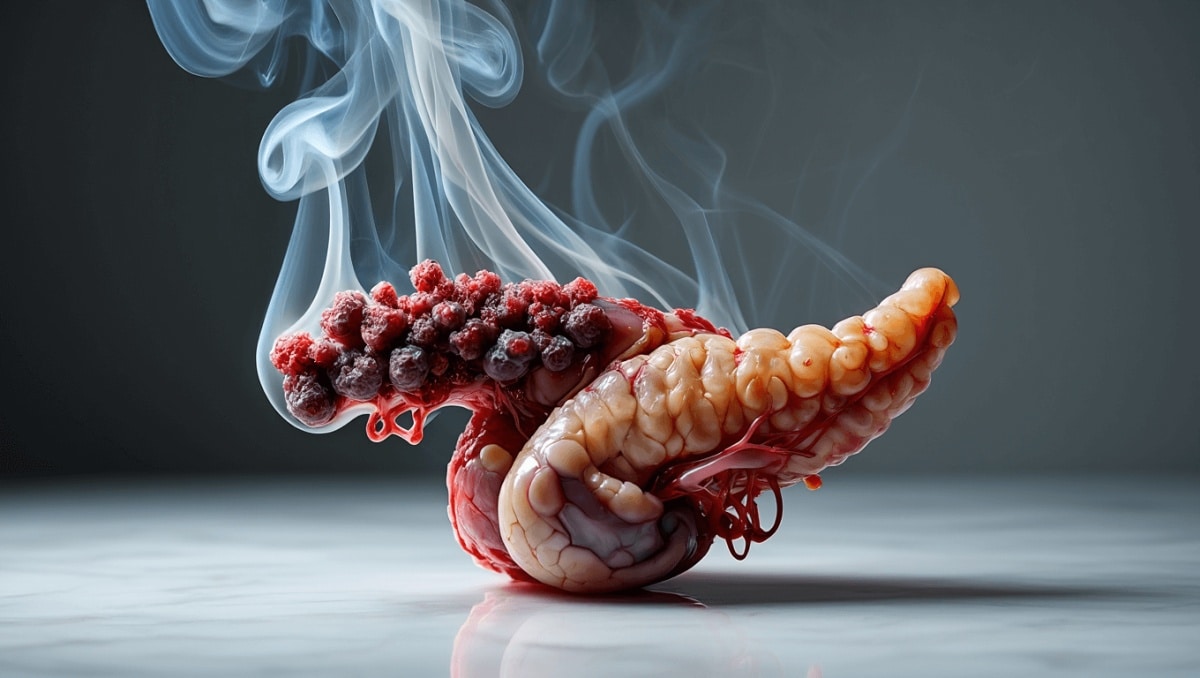
New evidence suggests that cigarette smoke does more than start some pancreatic cancers — it may also speed up tumor growth and help cancer cells spread. Researchers are piecing together how compounds in tobacco alter the pancreas and the immune system, creating an environment where cancer can thrive. This report examines the latest findings, the biological pathways involved, and what it could mean for patients and prevention.
Recent studies tie smoking to faster pancreatic tumor progression
Multiple laboratory and animal studies now indicate that exposure to cigarette smoke accelerates pancreatic tumor development. Scientists exposed pancreatic cells and mice to tobacco compounds and observed larger, more aggressive tumors. Epidemiological data also links long-term smoking to worse outcomes after diagnosis.
Eggs every day for months: simple check reveals shocking blood test result
Popular childhood food ingredient may raise adult anxiety: study
Evidence from lab and animal models
- Smoke-related chemicals increase cell proliferation in pancreatic tissue.
- Animals exposed to tobacco by-products show higher tumor burden.
- Combined tobacco exposure and genetic drivers, like mutated KRAS, amplify cancer growth.
How tobacco compounds change the pancreatic environment
Researchers are mapping how cigarette smoke reshapes the pancreas at the cellular level. The changes create a permissive niche for tumors. Several mechanisms appear to work together.
Key biological mechanisms identified
- Nicotine and nitrosamines: These chemicals stimulate growth signals in pancreatic cells.
- Inflammation: Tobacco promotes chronic inflammation, a known cancer driver.
- Stromal activation: Cigarette smoke activates pancreatic stellate cells, increasing fibrosis.
- Immune suppression: Smoking alters immune cell function, reducing tumor surveillance.
- Angiogenesis: Tobacco compounds can boost blood vessel formation that feeds tumors.
Smoking may help cancer cells escape and form metastases
Beyond making primary tumors grow faster, smoke exposure appears to aid metastasis. Cells show traits that help them leave the primary site and survive elsewhere.
Processes that enable spread
- Induction of epithelial-to-mesenchymal transition (EMT) in tumor cells.
- Changes in adhesion molecules that let cells detach more easily.
- Creation of favorable niches in other organs via circulating factors.
Clinical implications: what this means for patients and care
These findings could change how clinicians advise patients and design treatments. Smoking history might affect prognosis and therapy choices.
Potential impacts on diagnosis and treatment
- Smoking history could be integrated into risk models and staging assessments.
- Therapies targeting inflammation or the tumor stroma may work better for smokers.
- Immune-based treatments might require adjustment if smoking-induced immunosuppression is present.
Prevention and patient advice based on current knowledge
Stopping smoking remains one of the clearest ways to lower cancer risk. Emerging data suggests quitting could also slow progression if cancer develops.
- Quit smoking: Even after diagnosis, cessation may improve outcomes.
- Reduce exposure to secondhand smoke at home and work.
- Adopt a healthy diet and maintain regular medical checkups.
- Discuss smoking history with oncologists to tailor care plans.
Research gaps and future directions
Scientists still need to clarify which tobacco components are most harmful to the pancreas. Long-term human studies are needed to confirm lab findings.
Areas for future study
- Identifying molecular targets activated by smoke in pancreatic tumors.
- Testing anti-inflammatory and anti-fibrotic drugs in smoking-related cases.
- Exploring whether cessation after diagnosis changes tumor biology.
- Developing screening strategies for smokers at higher risk.
Public health perspective and screening considerations
Public health agencies may need to update messages about pancreatic cancer risks tied to smoking. Targeted screening and prevention campaigns could help high-risk groups.
- Focus on smoking cessation programs for populations with high cigarette use.
- Consider surveillance for heavy smokers with additional risk factors.
- Educate clinicians and patients about the link between smoke and aggressive disease.
Implications for drug development and personalized medicine
Understanding how cigarette smoke drives tumor growth points to new drug targets. Therapies that block smoke-driven pathways could be combined with standard care.
- Development of inhibitors that block nicotine or nitrosamine signaling.
- Drugs aimed at reversing smoking-induced immune suppression.
- Anti-fibrotic agents to normalize the tumor microenvironment.
Key warning signs and when to seek care
Early pancreatic cancer symptoms are subtle. Smoking history should lower the threshold for diagnostic evaluation if warning signs appear.
- Unexplained abdominal pain or back pain.
- New, unexplained weight loss.
- Onset of jaundice without clear cause.
- Persistent digestive problems or changes in stool.










