
Show summary Hide summary
- What makes thyme an effective natural defender
- How to brew a thyme tea for colds and irritated throats
- A concentrated thyme infusion to support gut health
- Make a thyme-infused oil to ease joint and muscle pain
- Other practical applications: skin, digestion and breathing
- Where to buy thyme and cost estimates
- Safety notes and who should be cautious
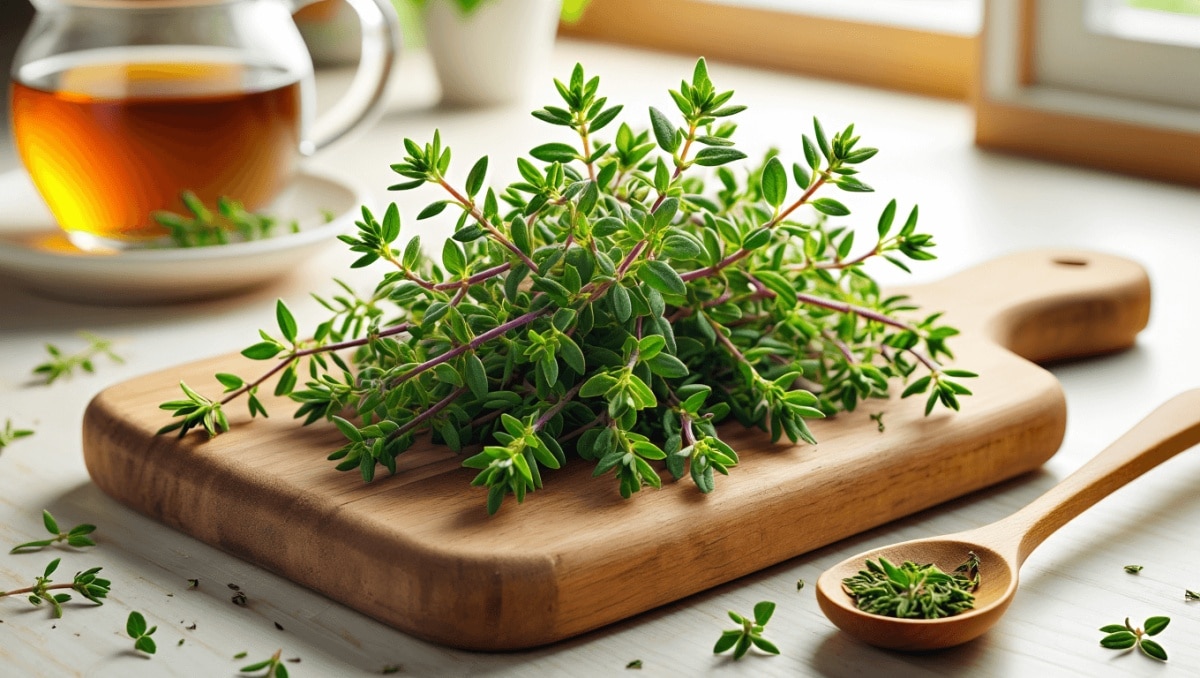
When a cough lingers or inflammation refuses to fade, many turn to simple remedies. Thyme is more than a kitchen herb. For centuries it has been used to clear airways, fight microbes and calm inflamed tissues. Modern research points to two potent molecules in thyme that explain these effects. Below you’ll find practical, science-backed ways to use thyme at home.
What makes thyme an effective natural defender
Thyme contains concentrated essential compounds. The two best known are thymol and carvacrol. They show antimicrobial and anti-inflammatory activity in laboratory and clinical studies.
Eggs every day for months: simple check reveals shocking blood test result
Popular childhood food ingredient may raise adult anxiety: study
- Thymol is linked to antiseptic and antiviral action. It helps ease sore throats and coughs.
- Carvacrol is active against certain intestinal parasites and fungal strains like Candida.
- Combined, these molecules explain thyme’s traditional uses for respiratory infections, digestive upsets and skin inflammation.
How to brew a thyme tea for colds and irritated throats
Ingredients
- 1 teaspoon dried thyme or 2–3 fresh sprigs
- 250 ml boiling water
- Optional: 1 teaspoon honey
- Optional: juice of half a lemon
Preparation steps
- Place the thyme in a cup and pour on boiling water.
- Cover and let steep for 10 minutes to release thymol.
- Strain out the herbs, then add honey or lemon if desired.
- Drink 2–3 cups per day at the first sign of a cold.
Why it helps: thymol acts against respiratory pathogens, honey soothes the throat, and lemon adds vitamin C.
A concentrated thyme infusion to support gut health
When to use
Use this stronger infusion if you suspect mild intestinal parasites or a Candida imbalance. It can support digestion but is not a substitute for medical treatment when infection is confirmed.
Ingredients
- 1 heaping teaspoon dried thyme
- 250 ml boiling water
How to take it
- Steep the thyme for 15 minutes for a more concentrated brew.
- Strain and drink warm on an empty stomach each morning.
- Continue for 7–10 days as a short support cure.
Note: consult a healthcare professional if lab tests show parasites. Thyme can complement, but not replace, prescriptions.
Make a thyme-infused oil to ease joint and muscle pain
Ingredients and equipment
- 3–4 tablespoons dried thyme
- 200 ml olive oil
- A sealed glass jar
Cold maceration method
- Put thyme in the jar and cover completely with olive oil.
- Seal and store in a dark cupboard for 2 weeks.
- Shake every 2–3 days for even infusion.
- After 2 weeks, strain through muslin and transfer to an amber bottle.
Quick warm method
If you need oil faster, heat the thyme and oil gently in a bain-marie for 30 minutes. Strain and use immediately. The warm method is practical but slightly less potent.
How to use
- Massage sore areas (knees, shoulders, back) twice daily.
- The oil soothes inflammation and supports mobility.
Other practical applications: skin, digestion and breathing
For digestion and post-meal discomfort
Drink a mild thyme tea after meals to reduce bloating and support digestion. Thyme’s bitter notes can stimulate bile and ease stomach inflammation.
For irritated skin (acne, eczema)
- Make a strong infusion: 2 tablespoons thyme per 250 ml water.
- Cool and strain, then apply as a compress for 10–15 minutes.
- Or add a few sprigs to a warm bath to soothe widespread irritation.
For sinus congestion and bronchial relief
- Pour boiling water into a large bowl and add 2 tablespoons dried thyme.
- Lean over the bowl, cover your head with a towel, and inhale steam for 10 minutes.
- Repeat once or twice daily until breathing improves.
Where to buy thyme and cost estimates
Dried thyme
- Supermarket spice aisle: about €2–3 for 30g.
- Organic bulk stores: €4–6 for 50g, often more fragrant.
- Online retailers: 100g organic jars around €8–10.
Fresh thyme
- Grocery stores: €1–2 per bunch.
- Local markets: often €0.50–1 per bunch.
Grow your own
A thyme plant from a garden center costs roughly €3–5. It thrives in a sunny pot and provides fresh leaves year-round.
Cost comparison: a 50g jar of dried thyme can yield many teas. That makes homemade remedies far cheaper than commercial syrups or topical drugs.
Safety notes and who should be cautious
Thyme is safe for most people when used in culinary amounts or moderate herbal doses. Still, some precautions matter.
- Pregnant or breastfeeding: avoid large doses and do not use thyme essential oil.
- Allergies: if you react to mint, basil or rosemary, test a small amount first.
- Medication interactions: speak with your physician if you take blood thinners or other regular drugs.
- Essential oil safety: never apply pure thyme essential oil to the skin. Prefer infusions or macerated oils for topical use.










