
Show summary Hide summary
Chia seeds have won a spot in many kitchens for their nutrition and versatility. But a recent medical alert shows they can be dangerous when eaten the wrong way. A surgeon treated a case that should remind everyone to handle these tiny seeds with care.
Surgeon’s warning after a near-miss emergency with chia seeds
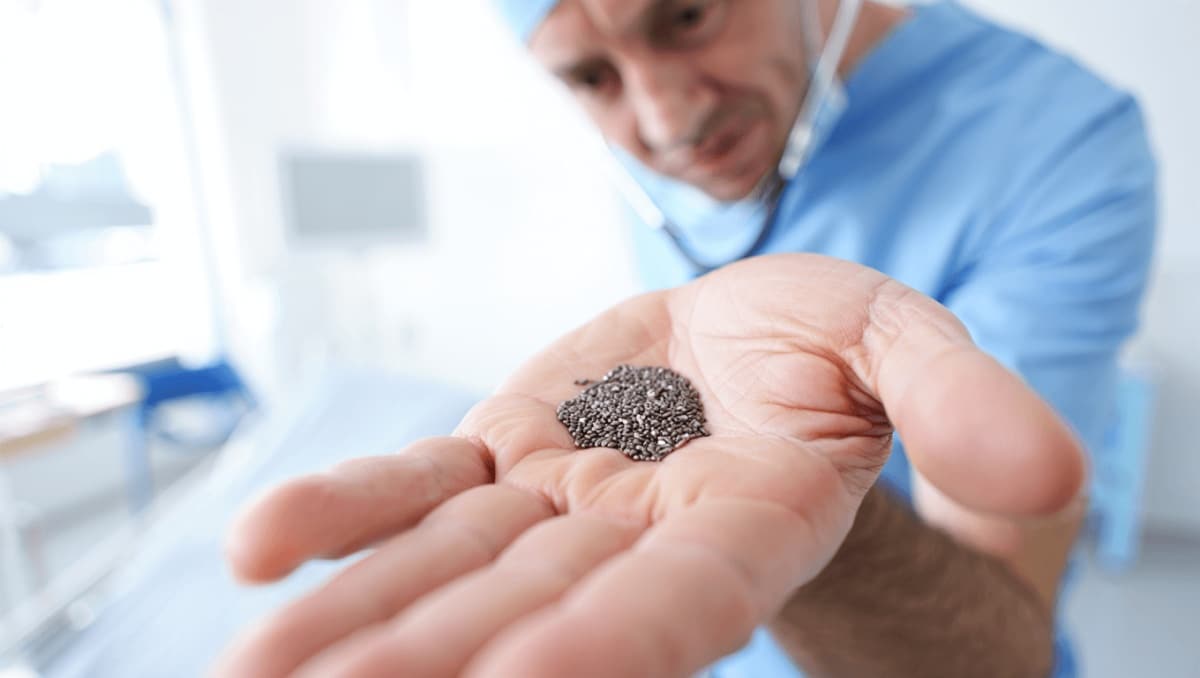
A visceral surgeon reported an alarming incident involving a regular chia eater. The patient consumed a large handful of dry chia, then swallowed a big glass of water. The seeds swelled rapidly inside his esophagus and formed a jelly-like plug.
Eggs every day for months: simple check reveals shocking blood test result
Popular childhood food ingredient may raise adult anxiety: study
Doctors had to act fast to remove the obstruction in the emergency unit. The surgeon stressed that this is not a hypothetical risk. Chia seeds can absorb up to 27 times their weight in water, which explains how a handful of dry seeds can expand into a dangerous mass.
Why the “tadpole water” trend can backfire
Many people pour chia into water for a few minutes and gulp it down. That quick soak often leaves seeds only partially hydrated. In that state they may swell after swallowing, inside the throat or esophagus.
The safe alternative is simple: let seeds hydrate long enough so they expand before you eat them. Allow them to soak overnight in yogurt or plant milk for best results.
What gives chia seeds their superfood status
Chia are nutritionally dense. Their unique absorption properties help explain both their benefits and risks.
- Fiber: roughly 34 g per 100 g, supporting digestion and regularity.
- Minerals: high in calcium, magnesium and potassium.
- Omega-3 fats: small daily amounts supply essential alpha-linolenic acid.
- Complete protein: about 16 g per 100 g, with all nine essential amino acids.
These features make chia a powerful ingredient when properly prepared. Their gel-forming ability is useful in recipes when seeds are pre-hydrated. But eaten dry, that same property can become hazardous.
Practical, safe ways to eat chia seeds every day
You don’t need to avoid chia entirely. Follow safe preparation methods to enjoy their benefits without risk.
Overnight chia pudding
- Mix 3 tablespoons of chia with 250 ml of milk or plant-based milk.
- Add a splash of vanilla or a drizzle of honey if you like.
- Stir well and refrigerate for at least 6–8 hours, ideally overnight.
- The result is a creamy, ready-to-eat pudding that’s safe to consume.
Blended into smoothies
- Add a teaspoon of chia directly to the blender with liquids and fruits.
- The seeds hydrate inside the drink, not in your throat.
- Keep portions small — a teaspoon to a tablespoon per drink is enough.
Egg substitute for baking
- Combine 1 tablespoon of chia seeds with 3 tablespoons of water.
- Wait about 5 minutes until the mixture thickens.
- Use this gel as an egg replacement in cakes and cookies.
Sprinkled as a garnish
- Use a small spoonful on salads, soups or yogurt.
- The low quantity poses minimal risk and adds crunch and nutrients.
How much chia is considered safe daily?
Health authorities in Europe recommend a limit. Do not exceed 15 grams of chia per day, about one tablespoon. Larger amounts can cause bloating or discomfort, even when seeds are hydrated.
Start with small servings and increase slowly to judge your tolerance.
Picking quality chia seeds matters
Choose seeds that are certified organic and clearly labeled. Look for pure products without additives or fillers. Proper packaging and a reputable source reduce contamination risks and ensure consistent quality.
If you already use chia, how do you prepare them? Share a tip or a favorite recipe so others can learn safe ways to enjoy these nutrient-packed seeds.










