
Show summary Hide summary
- Origins and beliefs behind the salt-and-water practice
- How to prepare the salt-and-water setup in minutes
- What the salt actually does for the bedroom air
- Why a glass of water might ease your mind before sleep
- Practical tips to increase the chances of better sleep
- When this trick won’t be enough
- Share your experience and observations
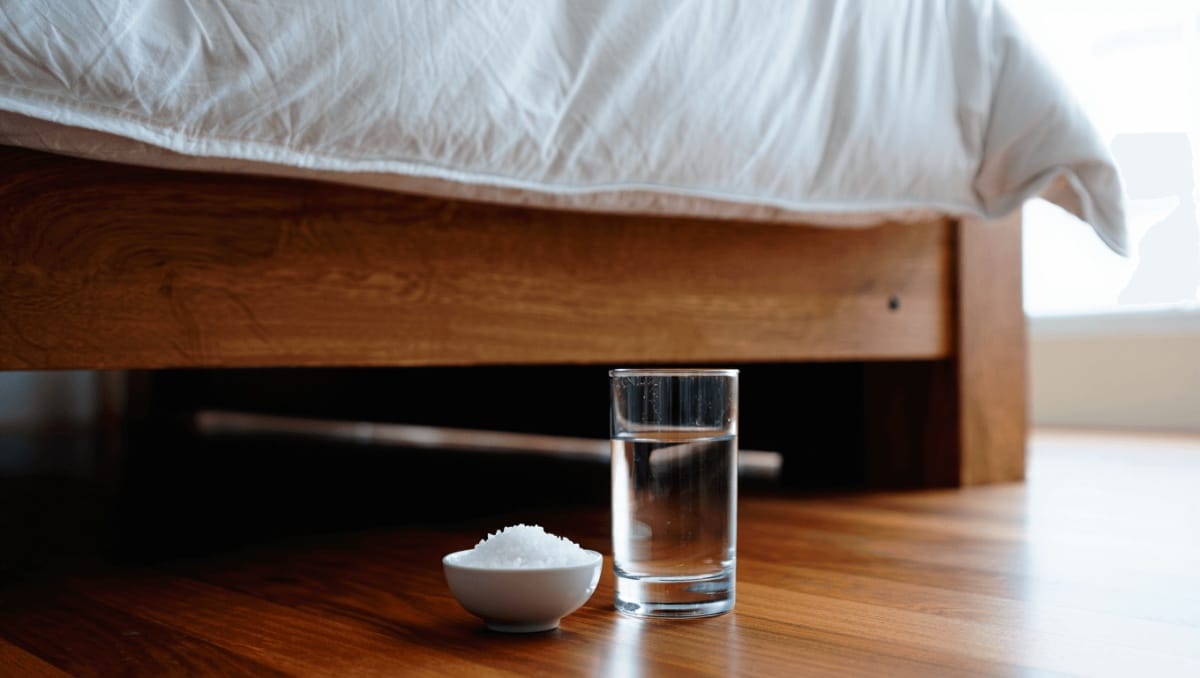
Struggling to fall asleep while your mind races? A simple grandmother’s trick has resurfaced online: placing a bowl of coarse sea salt and a glass of water beneath the bed. Part ritual, part household hack, it promises calmer nights with almost no effort.
Origins and beliefs behind the salt-and-water practice
This habit has roots in old domestic customs and in energy-focused traditions like feng shui. People used salt in corners and thresholds to refresh spaces. Water, in many cultures, stands for calm and renewal. Placed together under a bed, they form a small nightly ritual.
Eggs every day for months: simple check reveals shocking blood test result
Popular childhood food ingredient may raise adult anxiety: study
Social media revived the method recently, with influencers and a few home remedies channels showing how to do it. Whether you call it folk wisdom or spiritual practice, the idea spread because it is cheap, simple, and easy to try.
How to prepare the salt-and-water setup in minutes
Items to have on hand
- Coarse sea salt: unrefined, chunky grains work best.
- A ceramic or glass bowl: avoid plastic or metal, leave it open.
- A small glass of fresh water: kept beside the bowl.
Quick step-by-step
- Pour 200–300 g of coarse sea salt into the bowl. Do not press it down.
- Fill a glass with fresh, cool water.
- Slide both items under the bed, near the headboard if possible.
- Replace the salt every two weeks or earlier if it clumps.
- Change the water each night to maintain the ritual.
This ritual takes moments to set up and almost no cost. The nightly act of replacing the water helps anchor a bedtime habit.
What the salt actually does for the bedroom air
Forget mystical claims: the salt’s effects can be explained by simple physics. Coarse sea salt is hygroscopic. It draws moisture from the surrounding air.
- Less humidity: drier air under the bed reduces mold risk.
- Fewer dust mites: these pests thrive in moist environments.
- Reduced musty odors: drying the space makes it smell fresher.
- Cleaner microclimate: a less damp area is less hospitable to allergens.
Placed in a low-ventilation spot, salt can slow moisture accumulation. It does not sterilize the room, but it helps regulate a small microenvironment where dust and mold could gather.
Why a glass of water might ease your mind before sleep
The glass of water plays a different role. It is more symbolic than chemical. Regularly placing a fresh glass under your bed becomes a clear cue for the brain.
- Signals transition: the gesture tells your mind the day is over.
- Builds routine: repetition strengthens the sleep association.
- Soothes anxiety: the act of doing something simple calms some people.
Sleep specialists stress the power of a consistent bedtime ritual. Whether it’s herbal tea, dim lights, or a small water ritual, predictable cues help the brain move from alertness to rest.
Practical tips to increase the chances of better sleep
- Use essential oils sparingly: 2–3 drops of lavender or bergamot on a tissue near the bowl can add calming scent. Avoid direct contact with the salt. Check safety for children and pregnant people.
- Air your bedroom daily: open a window for 10 minutes each morning to refresh indoor air and lower nighttime humidity.
- Choose breathable bedding: cotton or washed linen promotes airflow and reduces night sweats.
- Keep the area clean: vacuum under the bed monthly to remove dust and debris the salt doesn’t touch.
When this trick won’t be enough
This method is not a cure-all. If you suffer persistent insomnia, daytime fatigue, loud snoring, or anxiety that wrecks sleep, professional advice is essential.
Medical evaluation can uncover sleep apnea, mood disorders, or physical conditions that need treatment. Use simple rituals as complements, not replacements, for clinical care.
The ritual’s real value often lies in three things: improved microclimate under the bed, a calming bedtime routine, and conscious care of your sleeping space. Together, these can help some people fall asleep more easily.
Share your experience and observations
Have you tried placing salt and a glass of water under your bed? Report what changed for you. Practical feedback from users helps separate useful home hacks from mere folklore.










