
Show summary Hide summary
- Hard-boiled or fried eggs: which option fits your daily health goals?
- What’s inside an egg: key nutrients that matter
- Cholesterol and cardiovascular risk: what doctors say now
- How to boil eggs perfectly and avoid the green ring
- Tips for frying eggs without losing quality
- Common mistakes that reduce eggs’ nutritional benefits
- Practical choices: when to pick boiled or fried
- Share your morning egg ritual
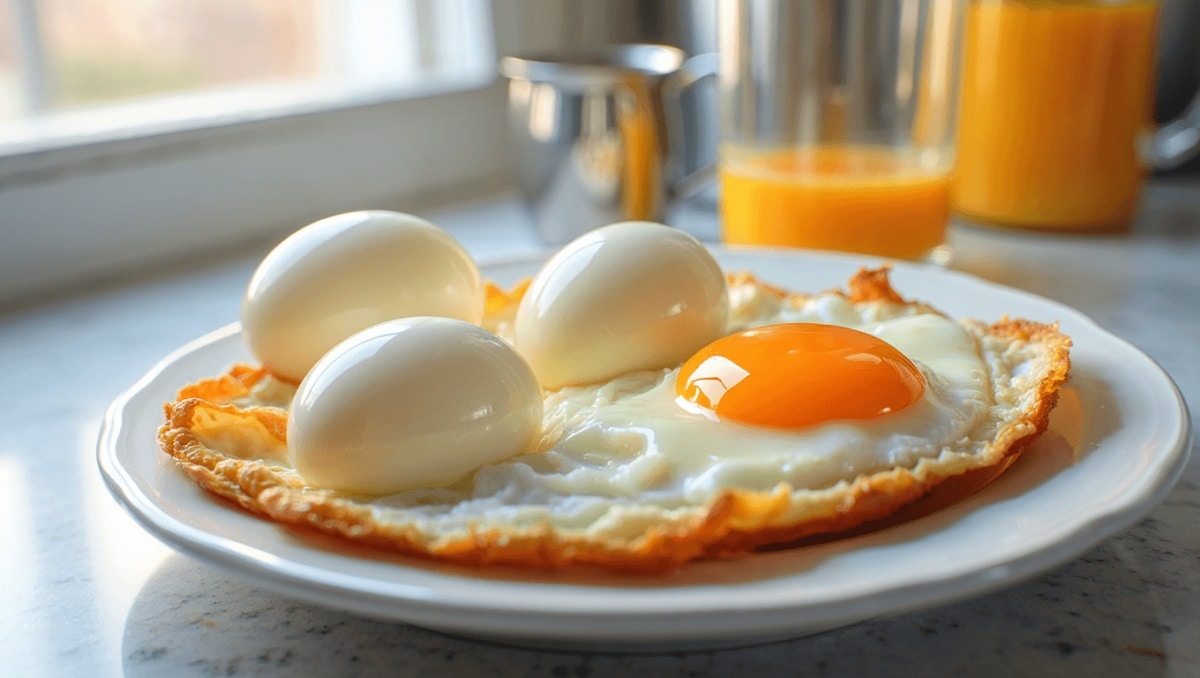
At your kitchen counter at 7 a.m., the same small dilemma returns: a quick hard-boiled egg or a hot fried egg with a runny yolk? Both are staples, but the way you cook them changes calories, convenience and even how your body uses their nutrients.
Hard-boiled or fried eggs: which option fits your daily health goals?
If you evaluate eggs by calorie control and ease, the hard-boiled egg usually comes out ahead. Boiling needs no added fat, keeps preparation simple, and provides a stable source of energy that helps reduce mid-morning hunger.
Eggs every day for months: simple check reveals shocking blood test result
Popular childhood food ingredient may raise adult anxiety: study
- Hard-boiled egg: about 70 kcal each.
- Fried egg: around 90–100 kcal with 1 teaspoon (5 ml) of oil.
The calorie gap seems small per serving, but it grows over days and weeks. Boiled eggs are easy to batch-cook and store in their shells for 3 to 4 days in the fridge. Fried eggs require a pan, oil, and washing up, so they suit relaxed mornings or weekend meals.
What’s inside an egg: key nutrients that matter
An egg is compact nutrition. Whether poached, fried or boiled, it delivers essential building blocks.
- Protein: roughly 6 g of complete protein per egg, with all nine essential amino acids.
- Choline: supports memory and focus; one egg covers about 25% of daily needs.
- Lutein and zeaxanthin: eye-protecting antioxidants tied to retinal health.
- B vitamins: help energy production and nervous system function.
- Vitamin D: important for bone health and immunity; eggs are one of the few food sources.
Cooking improves protein availability. Your body absorbs about 90% of the protein in a cooked egg, versus roughly 50% from a raw egg. Overcooking, however, can reduce some heat-sensitive vitamins, such as B12.
Cholesterol and cardiovascular risk: what doctors say now
The long-standing warning to limit eggs has shifted. The egg yolk contains about 186 mg of cholesterol, which once led to strict limits on weekly intake.
Recent science shows dietary cholesterol and blood cholesterol are not directly interchangeable. The liver adjusts its own cholesterol production in response to what you eat.
As a result, most healthy adults can eat an egg a day without raising cardiovascular risk. Major health organizations no longer set a hard cap on eggs per week. Still, people with diabetes or specific heart conditions should consult their physician to personalize guidance.
How to boil eggs perfectly and avoid the green ring
Boiling an egg feels simple but timing is key. Follow this reliable method for consistent results:
Three-step perfect boiling method
- Put eggs in a saucepan and cover with cold water so the water is 2 cm above the eggs.
- Bring to a simmer, then count 9 minutes from the first gentle boil.
- Shock in cold water immediately to halt cooking and make peeling easier.
A countertop egg cooker can simplify this: they cook several eggs at once and prevent overcooking.
Why a green ring appears around the yolk
The gray-green halo is harmless. It forms when iron from the yolk reacts with sulfur in the white during prolonged heat. The color signals overcooking and a slight loss in texture and flavor.
Tips for frying eggs without losing quality
- Use medium heat to avoid rubbery whites and burned edges.
- Limit oil to about 5 ml per egg for lower calories.
- Cook slowly for a tender white and glossy yolk, like at a brunch.
Common mistakes that reduce eggs’ nutritional benefits
Simple habits can cancel the nutritional advantages of eggs. Watch for these pitfalls:
- Pairing an egg with a croissant or other high-calorie pastry. A buttered croissant adds around 400 kcal and undoes the egg’s appetite control.
- Discarding the yolk. The yolk concentrates choline, vitamins and antioxidants. Removing it sacrifices most of the egg’s nutrients.
- Consistent overcooking. Long cooking times degrade certain vitamins and reduce digestibility.
- Eating eggs alone without fiber or whole grains. Combine eggs with complex carbs and fruit or vegetables for a balanced breakfast.
Practical choices: when to pick boiled or fried
Make your choice based on time, appetite and pleasure.
- Weekday mornings: hard-boiled eggs are fast, portable and keep you full.
- Lazy weekends: fried eggs reward patience and taste.
- Batch prep: boil several eggs on Sunday to simplify healthy breakfasts all week.
Share your morning egg ritual
Are you team hard-boiled or team fried at breakfast? Tell us your favorite egg recipe or how you combine eggs for a filling morning meal.










