
Show summary Hide summary
Eggs are a pantry staple: affordable, quick to prepare and packed with protein. Yet many still worry they harm the liver. Recent research helps separate myth from fact.
Hard‑boiled eggs, choline and why the liver benefits
The liver handles fat metabolism, detox and bile production. For those tasks it needs the nutrient choline. Choline helps export fat from liver cells so it can be burned for energy.
Eggs every day for months: simple check reveals shocking blood test result
Popular childhood food ingredient may raise adult anxiety: study
Without enough choline, fat can build up in the liver and lead to nonalcoholic fatty liver disease, a condition affecting about one in four adults worldwide. The body does not make sufficient choline on its own, so diet matters.
A single hard‑boiled egg delivers about 147 mg of choline. That is roughly a third of daily needs for many adults. The choline is concentrated in the yolk.
What large studies say about eggs and fatty liver risk
Major observational work published in 2024 followed 1,414 people for six years. Researchers found no link between eating eggs and a higher risk of fatty liver.
On the contrary, participants with the highest choline intake showed a roughly 28% lower risk of developing hepatic steatosis. In short, choline appears protective.
Experts in hepatology and nutrition now generally agree that, when prepared sensibly, eggs are safe and can be helpful for liver health.
Cooking method: the key factor that changes the picture
How you cook an egg can flip its effect on the liver. The egg itself is not the main problem; added fats and accompaniments are.
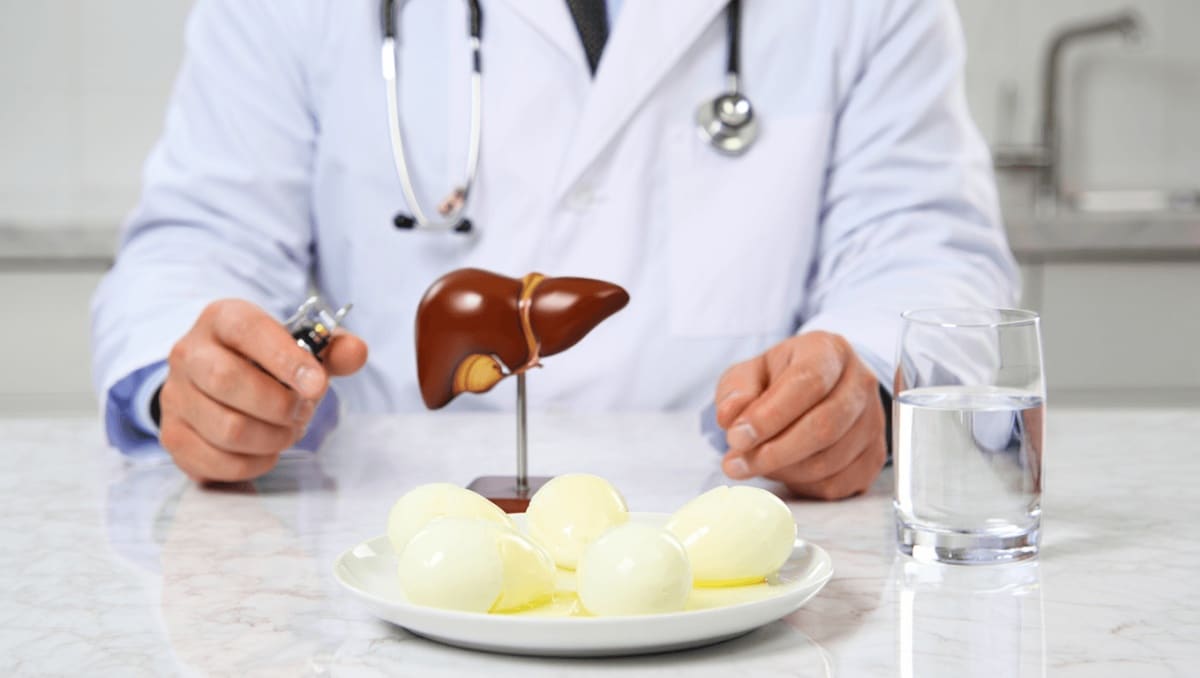
- Boiled or soft‑boiled: No added fat. Preserves choline and protein. Best choice for liver health.
- Poché: Cooked in water, minimal processing. Also a healthy option.
- Fried in butter or oil: Adds saturated fats and calories. Can burden the liver if eaten often.
- Cheesy, buttery omelettes: The cheese and cooking fats raise calorie and saturated fat intake.
Pairing eggs with high‑fat processed meats or buttery toast multiplies the negative impact. When eggs are part of a high‑fat, high‑calorie meal, the liver works harder.
Practical guidance: how many eggs and how to eat them
For healthy adults, most nutrition specialists consider 1 to 2 eggs per day appropriate within a balanced diet. Preparation should avoid added fats.
For people already diagnosed with fatty liver disease, many hepatologists advise limiting to one egg daily, preferably boiled or poached. Always consult your physician to tailor advice.
- Favor eggs boiled, poached or gently cooked without butter.
- Combine eggs with vegetables, whole grains and healthy fats like olive oil in moderation.
- Limit processed meats and excess cheese at the same meal.
- Use an egg cooker or timer for consistent, fat‑free results.
Quick facts and actionable tips for liver‑friendly breakfasts
- Top food source: Eggs are one of the richest dietary sources of choline.
- Protective effect: Higher choline intake linked to a 28% lower risk of fatty liver in a long‑term study.
- Cooking counts: Boiled and poached eggs are liver‑friendly; fried eggs may add harmful fats.
- Context matters: Overall diet quality matters more than any single food.










