
Show summary Hide summary
- Why waking up between 3 and 4 a.m. is so common
- How sleep architecture makes that hour fragile
- Stress, midnight rumination and cortisol spikes
- Blood sugar dips and evening alcohol: overlooked wake-up causes
- Small bedroom annoyances that break the night
- How aging and hormones change night patterns
- Evidence-based actions to return to sleep faster
- When to seek professional help
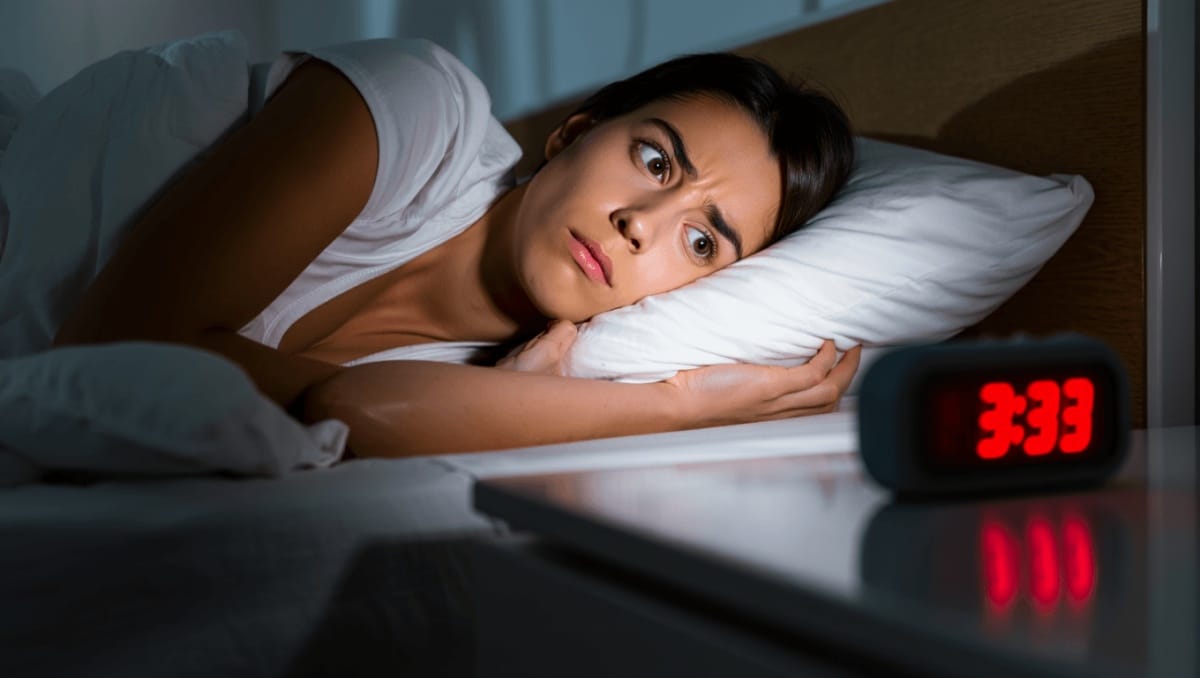
You wake in the dark, glance at the clock and it reads 3:33 a.m. A rush of annoyance and puzzlement follows. Why does this hour seem to pull so many of us out of sleep?
Why waking up between 3 and 4 a.m. is so common
Millions of sleepers report the same pattern: a sudden, almost mechanical awakening in the early hours. This is not random. It reflects the way our bodies cycle through different stages of sleep and how hormones and environment interact at night.
Eggs every day for months: simple check reveals shocking blood test result
Popular childhood food ingredient may raise adult anxiety: study
Night awakenings around 3 a.m. are often the result of overlapping biological rhythms. When those rhythms line up the wrong way, the brain becomes far more likely to shift from sleep to wakefulness.
How sleep architecture makes that hour fragile
Sleep is not a single, unbroken state. It unfolds in repeating cycles that last roughly 90 minutes. Early in the night, deep slow-wave sleep dominates. Later, REM and lighter stages take over.
Between 3 a.m. and 4 a.m., many people enter a stretch with more REM and lighter sleep. In this phase, the threshold between dreaming and waking is thin. Small disturbances can trigger full awakening. Evolutionary biology likely favored this pattern as a low-level night watch, a protective alertness against threats.
Stress, midnight rumination and cortisol spikes
When daytime worries lose daytime distractions, they can resurface in the quiet night. The brain uses sleep time to process emotions. For some, that becomes a loop of anxious thoughts.
At the same time, the body begins to raise cortisol levels hours before waking. Cortisol helps mobilize energy for the day, but a small night-time surge can act like a switch. If you are already stressed, this hormonal nudge can turn light sleep into wakefulness. The combination of anxious thinking and a cortisol rise makes returning to sleep harder.
Blood sugar dips and evening alcohol: overlooked wake-up causes
Your brain keeps running while you sleep, and it needs glucose. If liver glycogen drops in the early morning, mild hypoglycemia can occur. The body responds by releasing adrenaline. Heart rate climbs and you may jerk awake.
Alcohol is another culprit. It can speed sleep onset but fragments the second half of the night when the liver clears it. That metabolic rebound often aligns with the 3–4 a.m. window.
Small bedroom annoyances that break the night
When sleep is light, minor stimuli become major. A glowing charger LED, distant machinery, or a partner’s turn in bed can be enough to wake you.
- Temperature matters: core body temperature hits a low near 4 a.m. A room that’s too warm prevents natural cooling and promotes wakefulness.
- Ambient light and small noises that seemed irrelevant at 11 p.m. can act like alarms in the early morning.
- Uncomfortable bedding or a non-breathable duvet may disrupt heat regulation and trigger a wake-up.
How aging and hormones change night patterns
Sleep evolves with age. The pineal gland makes less melatonin over the decades, which often leads to more fragmented sleep. Older adults commonly wake earlier and more often.
Hormonal shifts in women — from menstrual cycles to pregnancy and menopause — also alter night-time temperature regulation and sleep quality. When those awakenings are paired with daytime exhaustion, loud snoring, or morning headaches, screening for sleep disorders such as sleep apnea is advisable.
Evidence-based actions to return to sleep faster
Rather than fight inertia in bed, behavioral strategies can reduce the chance that a wake-up becomes a long episode of sleeplessness.
- If you are awake for more than 20 minutes, get out of bed. Move to a dim room and do a calm activity until you feel sleepy again.
- Keep the bedroom cool. Aim near 18°C to support your body’s natural temperature dip.
- Use the 4-7-8 breathing method to calm the nervous system: inhale 4 seconds, hold 7, exhale 8. This supports parasympathetic recovery.
- Limit evening alcohol and heavy late meals. If you are prone to drops in blood sugar, try a small, protein-rich snack before bed, such as a handful of almonds.
- Reduce light sources and mute devices. Consider blackout curtains and removing LED indicators from the bedroom.
- White noise or a gentle fan can mask intermittent sounds that would otherwise provoke awakenings.
Short routines that help
- Establish a wind-down ritual each night to lower baseline stress.
- Keep consistent sleep and wake times, even on weekends.
- Track patterns for a week to find recurring wake-up times and triggers.
When to seek professional help
Occasional early-morning awakenings are common. See a clinician if you experience:
- Persistent daytime sleepiness despite trying sleep hygiene tips.
- Loud, chronic snoring with choking or gasping at night.
- Frequent morning headaches or cognitive decline linked to poor sleep.
These signs can point to medical causes such as sleep apnea, mood disorders, or metabolic issues that deserve evaluation and treatment.










