
Show summary Hide summary
- How a banana at breakfast can spark a blood sugar roller coaster
- Why evening might be the smarter time to enjoy a banana
- Keep your morning banana—just pair it right
- Practical breakfast ideas that prevent the mid-morning dip
- When to be cautious: who should adjust banana habits
- Tips to get the most from bananas without the downside
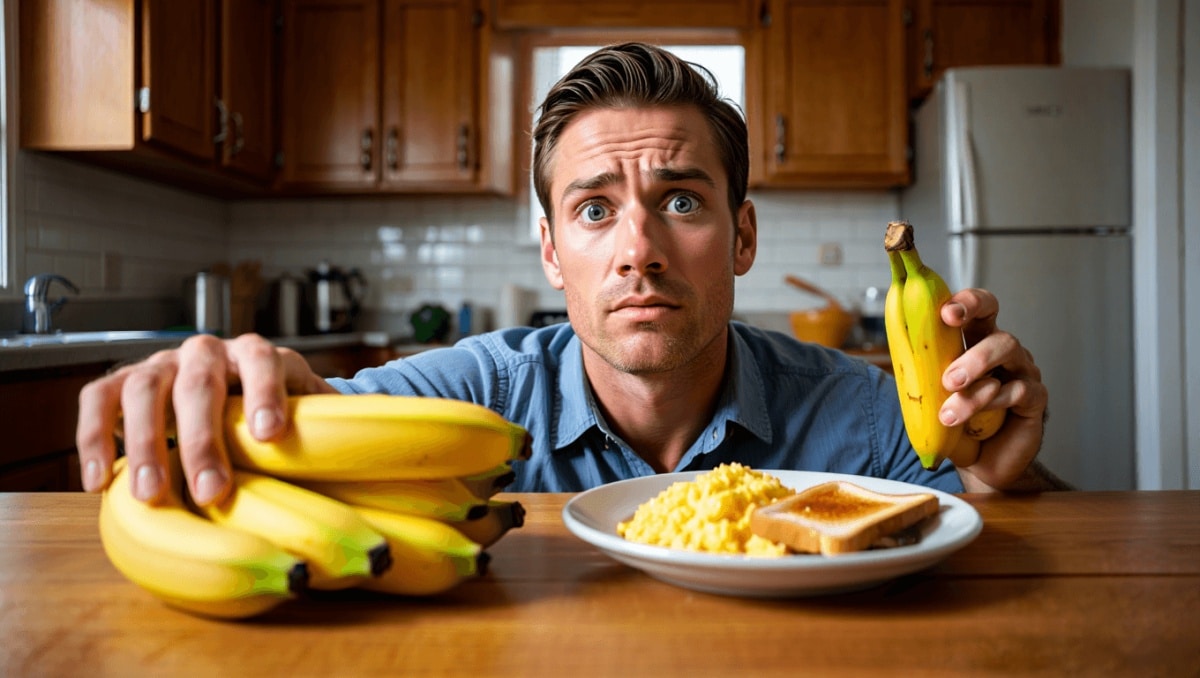
Grabbing a banana as you rush out the door feels smart, cheap, and healthy. Yet many people find themselves yawning and raiding the snack drawer by 11 a.m. Why does this simple fruit sometimes lead to a mid-morning energy crash? A closer look at timing, ripeness and food pairings reveals how to keep bananas working for you.
How a banana at breakfast can spark a blood sugar roller coaster
Bananas contain fiber, potassium and vitamins. But on an empty stomach, their natural carbs are absorbed fast. Your blood sugar spikes. Your pancreas responds by releasing insulin. Hours later, blood sugar can fall sharply.
Eggs every day for months: simple check reveals shocking blood test result
Popular childhood food ingredient may raise adult anxiety: study
This rapid rise and fall is often the cause of the mid-morning slump and sudden cravings. Ripe bananas with brown speckles contain more simple sugars. Less ripe bananas hold resistant starch, which digests more slowly and feeds gut bacteria.
- On an empty stomach, carbs reach the bloodstream quickly.
- Insulin swings can trigger fatigue and hunger within a few hours.
- Ripeness matters: green banana = slower release; spotted banana = faster sugars.
With continuous glucose monitors now common among health-conscious people, many see clear evidence that a very ripe banana alone can mimic the glycemic effect of a sweet treat.
Why evening might be the smarter time to enjoy a banana
Surprisingly, the evening is a favorable moment to eat this fruit. After dinner, your stomach already contains protein, fiber and healthy fats. These slow digestion and blunt blood sugar spikes.
Bananas also bring magnesium and tryptophan, nutrients that support muscle relaxation and the sleep cycle. Consumed about an hour before bedtime, a banana can help you unwind and reduce late-night junk food cravings.
- Magnesium soothes muscles and nerves.
- Tryptophan supports serotonin and melatonin production.
- When eaten after a balanced meal, sugar is absorbed more gradually.
Keep your morning banana—just pair it right
You do not have to give up bananas at breakfast. The trick is to pair them with protein and healthy fats. These nutrients act as brakes on digestion.
- Combine half a banana with Greek yogurt or skyr for a protein boost.
- Add a handful of nuts or a spoon of almond or peanut butter for healthy fats.
- Include whole grains or oats to increase fiber and slow absorption.
These small additions turn a quick carb into a sustained, satisfying meal. The result: fewer cravings, steadier energy and less temptation to snack before lunch.
Practical breakfast ideas that prevent the mid-morning dip
Quick combos to try
- Banana slices over plain Greek yogurt with chopped almonds.
- Oat porridge topped with banana and a spoonful of nut butter.
- Smoothie: banana, spinach, protein powder and a tablespoon of flaxseed.
- Whole-grain toast with nut butter and banana rounds.
These options balance carbs with protein and fat. They are easy to prepare and portable for busy mornings.
When to be cautious: who should adjust banana habits
Certain people should tailor their banana intake. If you have diabetes or insulin resistance, monitor portion sizes and pair fruit with protein. Choose less ripe bananas and consider half a fruit instead of a whole one.
Also, if you suffer from reflux, avoid eating just before lying down. Eating your banana as a dessert after dinner may be a better choice than right before bed.
Athletes are an exception. For a morning workout, a banana provides quick fuel that will be used during exercise. In that context, the rapid carbs are advantageous.
Tips to get the most from bananas without the downside
- Prefer slightly green bananas for slower sugar release.
- Always combine with a protein source at breakfast.
- Use nut butter or nuts to add healthy fats and prolong fullness.
- For sleep support, eat a banana an hour before bed after a balanced meal.
- For workouts, a banana alone can provide fast energy before activity.
Small changes in timing, ripeness and pairings make a big difference in how your body reacts to this common fruit.










