
Show summary Hide summary
- Lab tests reveal widespread effects of artificial and natural sweeteners on gut bacteria
- Sweeteners rarely act alone: combinations can flip effects
- Recreating a miniature gut showed reduced diversity and immune changes
- Implications for health research and what scientists want to study next
- Why sugar substitutes remain prevalent despite uncertainty
Many of us reach for “sugar-free” snacks expecting a harmless swap. A new laboratory study from the University of Cambridge suggests those substitutes can alter the growth of gut bacteria. The results reveal complex interactions, especially when sweeteners meet other common compounds like flavorings or prescription drugs.
Lab tests reveal widespread effects of artificial and natural sweeteners on gut bacteria
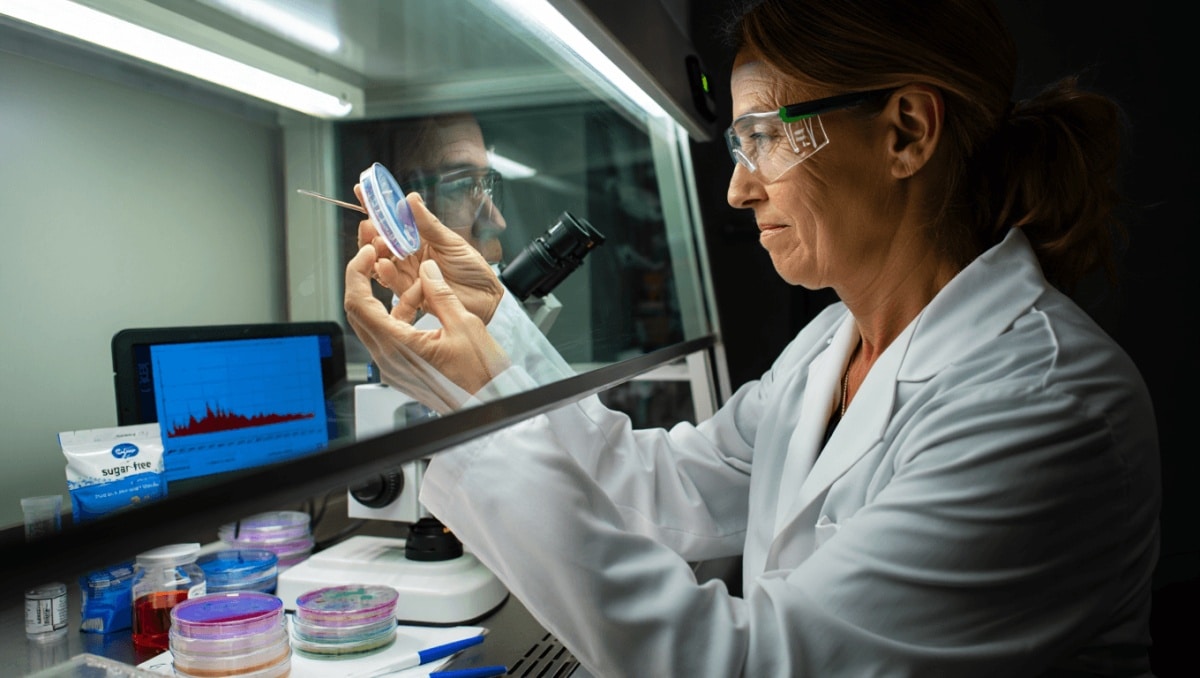
Researchers grew 25 bacterial species commonly found in the human gut. They exposed the cultures to 39 sugar substitutes, both natural and synthetic.
Eggs every day for months: simple check reveals shocking blood test result
Popular childhood food ingredient may raise adult anxiety: study
- About three-quarters of the sweeteners changed the growth of at least one bacterial species.
- Some compounds slowed or halted bacteria tied to healthy digestion.
The study challenges the notion that sweeteners are metabolically neutral. The team tracked growth rates to identify which microbes were helped, hindered or unaffected.
Sweeteners rarely act alone: combinations can flip effects
The scientists then tested sweeteners combined with other substances people commonly consume.
- They mixed sweeteners with items such as caffeine and vanilla extract.
- They also paired them with eight commonly used medications.
Across these tests, the effects changed in more than 100 instances. In 34 cases, the paired substance amplified the sweetener’s impact. In 68 cases, the effect weakened.
Notable pairing: isosteviol from stevia and the antidepressant duloxetine
One striking interaction involved isosteviol, a sweet molecule from stevia, and duloxetine, an antidepressant.
- Their combination strongly suppressed Roseburia intestinalis.
- It also reduced Parabacteroides merdae.
Both species play important roles in gut metabolism and digestive health. Duloxetine is widely prescribed — more than 4.2 million U.S. patients received it in 2023. That raises questions about real-world relevance for many people.
Recreating a miniature gut showed reduced diversity and immune changes
The team assembled a mixed community of all 25 bacteria to mimic the gut ecosystem. They exposed this mini microbiome to isosteviol and duloxetine together.
- Microbial diversity declined — a trait often associated with poorer gut resilience.
- Community structure shifted: some species bloomed while others dropped.
- Further tests indicated increased toxicity to certain host cells.
- Markers tied to inflammation and immune cell activity were disrupted.
These data suggest that compound combinations can reshape microbial communities and their interactions with host tissues.
Implications for health research and what scientists want to study next
The work does not prove that sweeteners or specific pairings harm people. It does expand the list of questions scientists must answer.
- Do these interactions occur in the human gut, at normal consumption levels?
- What doses trigger measurable changes in microbiome composition?
- Do altered microbial communities translate into clinical effects, such as metabolic or inflammatory changes?
- How do long-term exposure and multiple daily combinations influence outcomes?
Researchers say human trials, dose-response studies and real-world dietary assessments are the next steps. Mapping interactions between food additives and drugs will help clarify risks and guide recommendations.
Why sugar substitutes remain prevalent despite uncertainty
Use of low-calorie and sugar-free sweeteners continues to rise. Food makers reformulate products, and many Americans try to cut calories.
- About 40% of U.S. adults regularly consume sugar substitutes.
- Sweeteners are used in beverages, snacks and even to mask bitterness in medications.
Because these compounds are so widespread, understanding their subtle effects on the gut microbiome is a growing public health priority.










