
Show summary Hide summary
A large new study raises questions about the long-term brain effects of artificial sweeteners. Researchers in Brazil found links between several popular sugar substitutes and faster drops in cognitive performance, a finding that could matter for millions of people who use these products daily.
Key findings: connections between sweeteners and mental decline
Scientists tracked cognitive skills over time and found a clear pattern: higher intake of certain zero- and low-calorie sweeteners was tied to quicker deterioration in thinking and memory. People in the highest consumption group saw a 62% faster decline in overall cognitive scores than those who consumed the least.
Eggs every day for months: simple check reveals shocking blood test result
Popular childhood food ingredient may raise adult anxiety: study
- 62% faster decline for the highest sweetener consumers over eight years.
- The middle-intake group declined 35% faster than the lowest-intake group.
- Researchers estimated the largest gap equated to about 1.6 extra years of aging in cognitive terms.
Which sugar substitutes were included
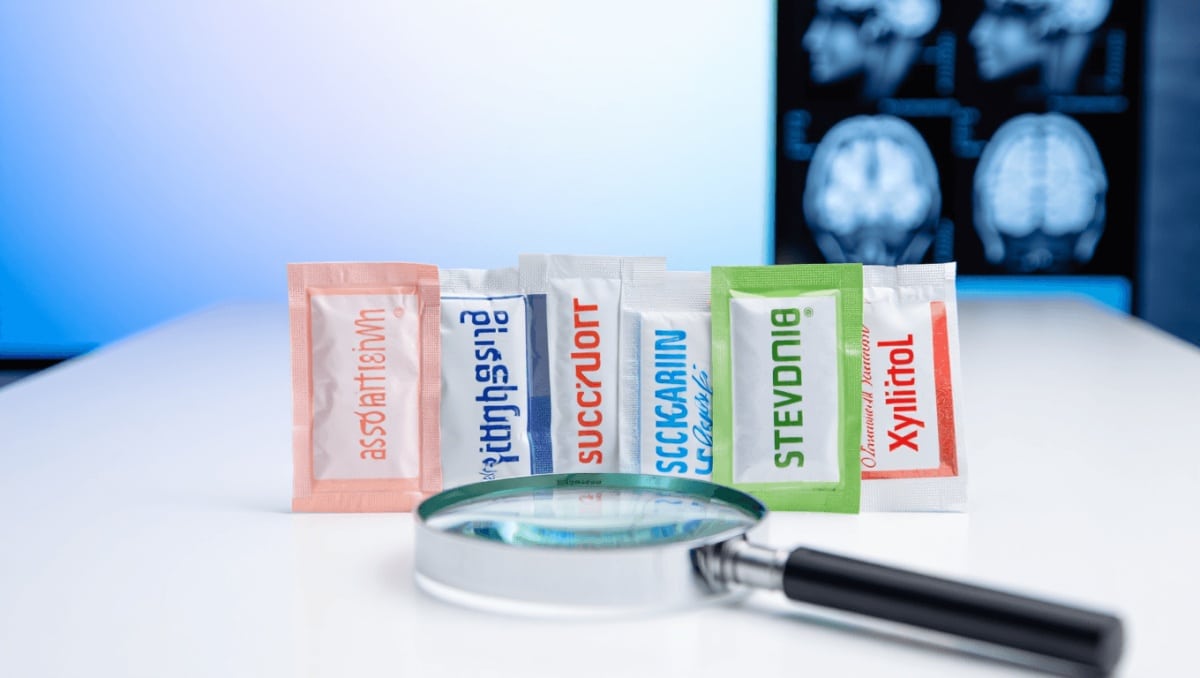
The team examined seven commonly used sweeteners found in many processed foods and sweetener packets. Six of them were tied to worse cognitive outcomes, while one showed no significant link.
- Aspartame
- Saccharin
- Acesulfame K
- Erythritol
- Xylitol
- Sorbitol
- Tagatose — the only one not linked to decline
How the study was conducted and who took part
Researchers from the University of São Paulo followed roughly 13,000 adults for eight years. Participants were about 52 years old at the start and were grouped by reported daily sweetener intake.
- Lowest group averaged ~20 mg per day.
- Highest group averaged ~191 mg per day.
- Cognitive tests measured memory recall, processing speed, and verbal fluency.
Tests and measurement details
Participants repeated several short assessments across the study period. Scores tracked changes in memory and information processing, which allowed researchers to estimate relative decline rates between groups.
Who showed the strongest links
Not everyone was affected equally. The associations were most pronounced in two groups.
- People under 60: Faster drops in verbal fluency and global cognition were more evident in younger middle-aged adults.
- Adults with diabetes: The connection was stronger among people with diabetes, who often use sweeteners to control blood sugar.
Given that roughly 40 million Americans have diabetes, this raises questions about the advice often given to limit sugar.
Why the results are not definitive
The study design cannot prove cause and effect. It shows an association, not a direct causal link. The authors highlighted several limitations that temper the findings.
- Dietary intake was self-reported and may be imprecise.
- Not every artificial sweetener on the market was studied.
- Observational data cannot eliminate hidden confounding factors.
Researchers called for further trials and more detailed work to understand whether switching to other sugar alternatives would change outcomes.
How this fits into broader food and health trends
Artificial sweeteners remain widespread as people seek lower-calorie foods and manufacturers reformulate products. About 40% of U.S. adults use these substitutes regularly.
- Common product examples: diet sodas, sugar-free gum, and many “keto” or low-carb packaged foods.
- Examples of sweetener uses: coffee, tea, baking, and tabletop packets.
As consumers weigh calorie reduction against potential long-term risks, health experts say more evidence is needed to recommend changes in routine or policy.










